
WorkSafeBC Updated Exposure Limits. Here’s the Fastest Way to Check If Your Respiratory Protection Still Matches the Job.
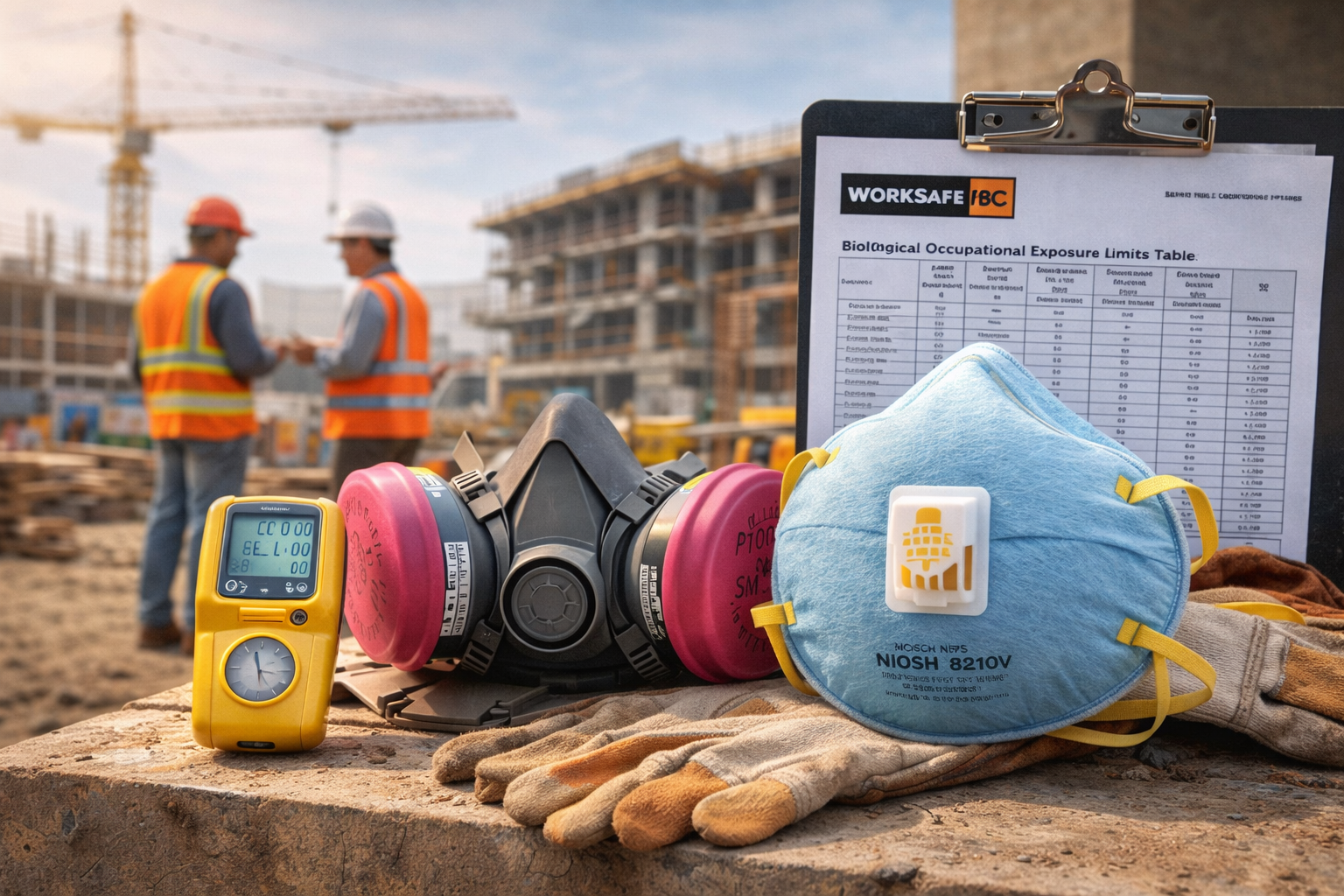
WorkSafeBC’s 2025 exposure limit updates (based on new/revised ACGIH TLVs) are a reminder to re-check your hazard assessments, controls, and respirator choices. Here’s what changed, what to review, and the respiratory protection essentials that help you stay ready.
A lot of workplaces don’t change their respiratory protection program until something forces the issue: a new chemical, a new process, an inspection, or a worker complaint.
WorkSafeBC quietly creates that “force the issue” moment every year by updating B.C. exposure limits based on new or revised ACGIH Threshold Limit Values (TLVs). In 2025, WorkSafeBC published updates tied to both the January and June ACGIH changes, including decisions on which TLVs were adopted and which were not (often due to sampling issues).
If you’re running a shop, plant, fleet operation, spray area, mechanical room, or jobsite where vapours, solvents, or dust are part of the day, this is your cue to do a quick “are we still aligned?” check.
What changed (and why employers should care)
WorkSafeBC explains the process plainly: when ACGIH publishes new or revised TLVs, WorkSafeBC reviews them and updates B.C. exposure limit references, including adding substances to the Table of Exposure Limits for Excluded Substances (Policy item R5.48-1) and updating the exposure limits tables.
Why that matters: your controls, monitoring plan, and PPE selection all lean on the same foundation. If a limit changes, the question becomes:
- Are we still under the limit in real work conditions?
- Are our controls strong enough for peaks, not just averages?
- If we rely on respirators, are we using the right type, the right filter/cartridge, and the right fit?
The common gap: “We have respirators” isn’t the same as “We’re protected”
Most program problems aren’t dramatic. They’re boring:
- The wrong cartridges for the contaminant
- Filters used past their service life
- A half mask that doesn’t seal well on the worker who actually wears it
- Fit testing done once, then forgotten
Those are exactly the kinds of things that show up during an inspection, or worse, after symptoms appear.
Product spotlight: Respiratory protection essentials from Pickering Safety
If your assessment or monitoring says respiratory protection is needed (even as backup to ventilation), you want three things: a reliable mask, the right filters, and a way to confirm fit.
Here are three practical building blocks Pickering Safety carries:
1) Half Mask Respirators
Half-mask respirators are a flexible baseline for many industrial tasks because they pair with different cartridges and filters depending on the hazard. Pickering Safety offers Half Mask Respirators as part of its masks and respiratory protection lineup.
2) Multipurpose respirator filters / cartridges (gas + vapour + particulate)
Pickering Safety’s Respirator Filters (multipurpose) are described as a combination gas/vapour cartridge with P100 particulate filtration and compatibility with several North mask series (5400, 5500, 7600, 7700).
(That “combination” approach is often what you need when the job has both particles and chemical vapours.)
3) Fit-check tools (because seal is everything)
Pickering Safety also carries Respirator Ampules used for qualitative fit checking (the product description notes a banana oil odour method and that detecting the odour indicates the respirator needs adjustment or replacement).
And if your needs are simpler or task-specific, Pickering Safety’s masks category includes items like 3M N95 respirators (e.g., 3M 8210) and other disposable options.
A quick “do this now” checklist (20–30 minutes, high payoff)
If you want an easy win that aligns with the exposure limit conversation:
- Pull your SDS list for the chemicals you actually use (not what procurement ordered once).
- Review your hazard assessment and see whether any tasks involve vapours, mists, or dust where limits may be relevant.
- Confirm your respirator selection: half mask vs disposable vs other, and whether you need combination protection.
- Check cartridges/filters: correct type + expiry/service life + stored properly.
- Verify fit practices: new hires, facial hair, weight change, different model mask, etc.
- Document it so it’s easy to show during an inspection and easy to repeat.
The bottom line
WorkSafeBC’s 2025 exposure limit updates are a reminder that “normal work” changes over time, even if your processes don’t.
If it’s been a while since you reviewed your respiratory protection setup, this is a good moment to tighten it up: the right mask, the right filters, and a fit process your team can actually follow.
If you want to make it simple, start with the basics Pickering Safety already stocks: half mask respirators, multipurpose filters, and fit-check ampules, and build from there based on your hazard assessment.